
ESHINE / Dining Tables
Designed for people to gather.
Develop the tabletop and its base together, from a residential dining setting to a coordinated restaurant or hotel furniture program.
THE APPLICATION
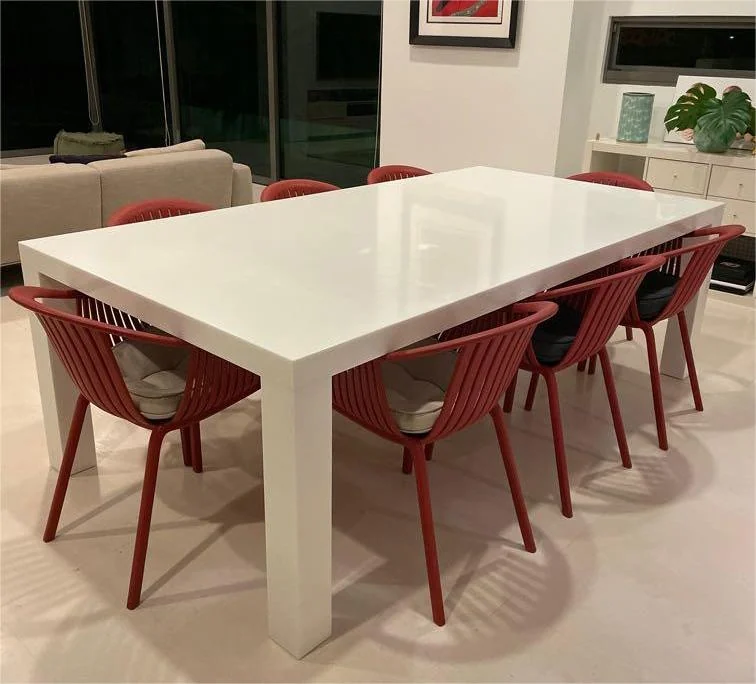
A dining table is a complete assembly.
A dining table must offer more than an attractive surface. Seating comfort, leg clearance, stability and the relationship between the top and its base all influence the experience. Solid surface provides a flexible starting point for the tabletop, while the supporting structure determines how the finished table performs in its intended setting. These elements should be designed together.
ESHINE works with buyers considering complete tables as well as separately fabricated tops. Clarify the supply scope at the beginning: tabletop only, top with a selected base, or a custom assembly developed for a furniture brand. Residential dining tables, restaurant tables and hotel dining programs can share a material palette while needing different proportions, handling arrangements and replacement strategies.
MATERIAL & DETAIL
Why choose solid surface?
A surface shaped to the setting
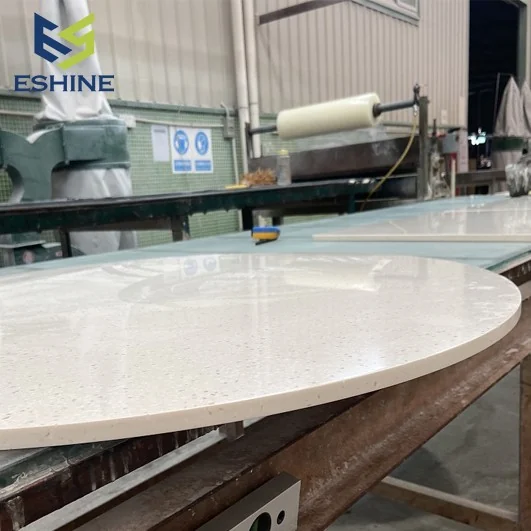
CNC machining can develop round, rectangular, oval and other reviewed tabletop outlines. The most useful shape follows seating, circulation and the room plan. Before selecting a dramatic outline, check that guests can approach comfortably and that the base supports the perimeter where required.
Continuity across a furniture program
A coordinated color and finish can connect tables of different sizes within a restaurant or hotel. Physical approval samples help define the intended appearance. Patterned tops require additional consideration of vein direction, cutting yield and the degree of variation acceptable between separate pieces.
An approachable maintenance plan
A smooth surface supports routine wiping between uses. Cleaning products, finish selection and staff instructions should be agreed with the operator. Solid surface is not scratchproof or heatproof: protective measures remain necessary, and any refinishing should be assessed against the actual damage and tabletop construction.
DESIGN POSSIBILITIES
From family meals to hospitality service.
Residential dining tables
Consider the daily number of seats, occasional guests and the space around chairs when occupied. A rounded corner or softened edge can change the table's feel without changing its footprint. Coordinate the underside and base so that comfortable seating positions remain available around the top.
Restaurant and hotel dining
Plan tables against the seating layout and service routes. Operators may want formats that can be moved or combined, but weight, base position and floor conditions affect handling. Include cleaning access and the visual relationship between adjacent tables when setting out the furniture schedule.
Custom bases and edge profiles
A pedestal, frame or individual legs produce different expressions and support conditions. Discuss the material, finish, mounting plate and connection to the top. An apparent thick edge may use a fabricated build-up rather than a solid slab; show that construction clearly in the approval drawing.
MATERIALS & SPECIFICATIONS
Define the details.
Top material and thickness
Select the sheet formulation and finish against the intended use and fabrication. Thickness is part of an assembly decision, including underside support and the desired edge profile. The advertised sheet range does not establish the structural adequacy of an unsupported dining tabletop of any size.
Base and attachment detail
Provide base drawings, fixing locations and the planned interface beneath the top. Review stability, loading and any project testing requirements with the responsible furniture designer. Confirm whether bases are included in ESHINE's quotation or supplied separately; do not leave this to interpretation from a catalog photograph.
OEM dining table manufacturing
For OEM or ODM programs, agree a first-article approval process covering dimensions, edge treatment, surface finish, base connection and packing. CNC profiles and cut-to-size work should follow approved files. Thermoformed or sculptural details need their own feasibility review rather than being assumed available for every color.
APPLICATION GALLERY
A closer look.
PREPARE YOUR PROJECT
Build the quote around the whole table.
Share the room type, seating plan, table dimensions, shape, color, edge section and base reference. State quantities by model and whether tops and bases ship assembled or separately. Include the destination and installation access. A packing proposal can then account for the tabletop perimeter, base components and the way the receiving team will identify and assemble each table.
View ProjectsRELATED PRODUCTS
Find your material starting point.
FREQUENTLY ASKED QUESTIONS
Before you specify.
Can I purchase a complete dining table?
Discuss the top and base together with your inquiry. ESHINE's existing archive includes complete table references, but the quoted scope must confirm the selected base, attachments, finish and assembly requirements. A tabletop listing alone does not include a base by implication.
How do I choose an edge thickness?
Start with the desired visual profile and the proposed structural support. Request a section showing the sheet thickness and any built-up edge. Review weight, joint positions and attachment details before approving the appearance of the finished table.
Can you manufacture a restaurant's custom table series?
Provide the furniture schedule and drawings for each format. Define prototype approval, finish consistency and packaging expectations. Quantities, base variations and delivery requirements can then be reviewed as one OEM manufacturing brief instead of several unrelated tabletop orders.
YOUR PROJECT / NEXT STEP
Request a Quote
Send a tabletop drawing and base reference, or your complete furniture schedule. Define the next dining table around its users and setting.