
ESHINE / Furniture
Furniture with a sculptural point of view.
Explore coffee tables, side tables, displays and integrated furniture through a material that can connect surfaces, edges and carefully developed forms.
THE APPLICATION
Think beyond a flat furniture panel.
Solid surface furniture can use a consistent finish across the top, side and return of an object. That continuity is useful for a small side table, an architectural display or an integrated retail fixture. The design opportunity lies in how the material is fabricated and supported, rather than in treating it as a substitute for every part of a conventional cabinet.
This application focuses on non-dining furniture. Coffee tables, side tables, shelving, display furniture and custom commercial components each have their own proportions and working conditions. Complete dining tables are covered separately. ESHINE can review OEM or ODM concepts from furniture brands and interior teams, including CNC machining, cut-to-size supply and custom fabrication from approved drawings.
MATERIAL & DETAIL
Why choose solid surface?
A continuous visual language
Joined and finished components can give furniture a cohesive appearance across several faces. Joint positions still require careful planning, particularly with directional patterns. Identify the visible faces and viewing distance early so that the fabrication proposal reflects how the object will actually be seen.
A bridge between furniture and interior
The same material direction can connect a freestanding display with nearby counters or wall surfaces. This coordination can help an interior feel considered without making every object identical. Confirm color and finish using physical references, especially when parts are ordered at different stages.
Development through prototypes
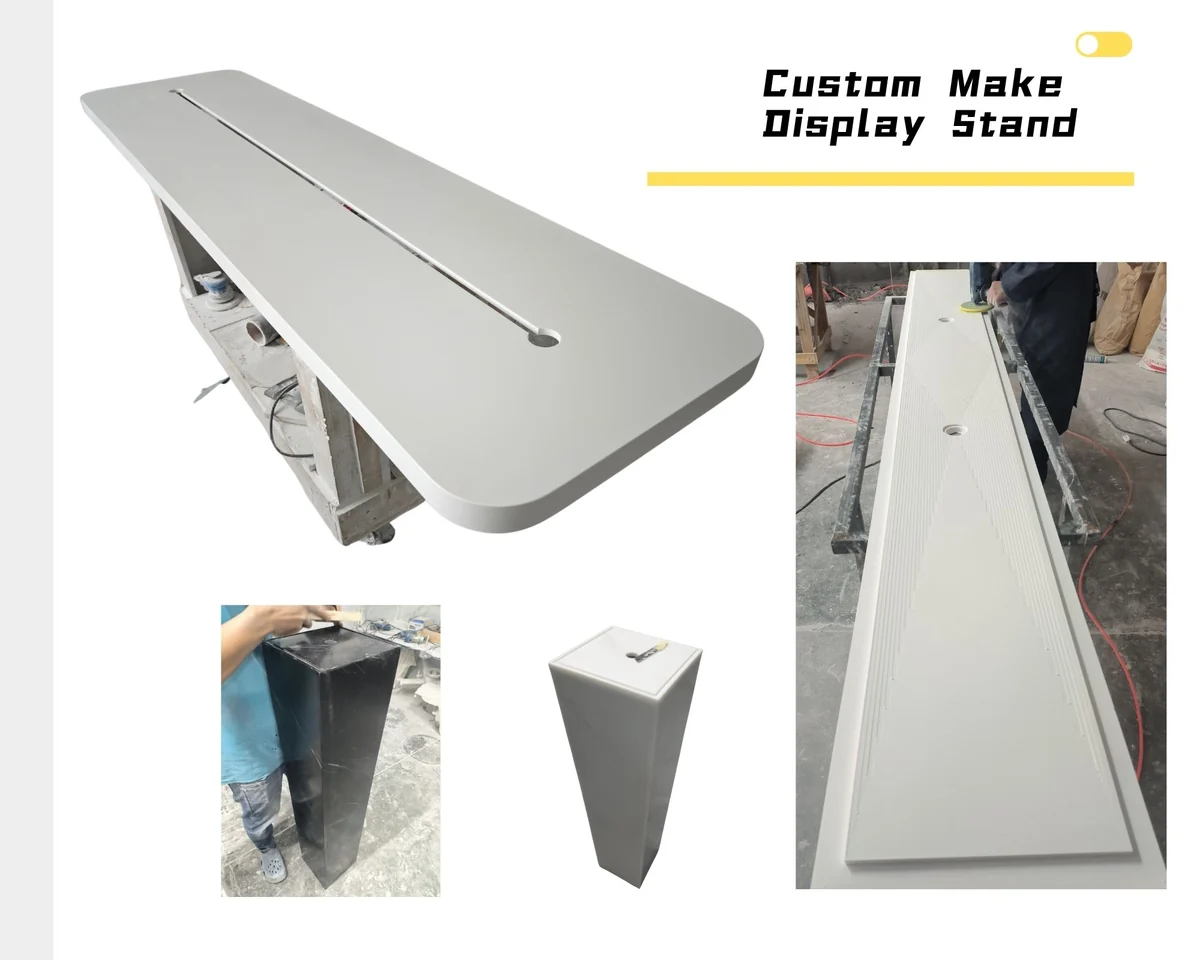
A first article allows the team to review proportion, touch points, access and assembly. This is particularly valuable for a new commercial fixture whose rear structure is less visible in a rendering. Prototype approval should record construction details as well as the external appearance.
DESIGN POSSIBILITIES
Small objects. Integrated systems.
Coffee tables and side tables
Explore low profiles, nested forms or a compact occasional table around the seating arrangement. Check reach, movement and the relationship to surrounding furniture. Hollow or built-up constructions may create visual volume without implying that the piece is a solid block; the drawing should explain the intended assembly.
Shelving and display furniture
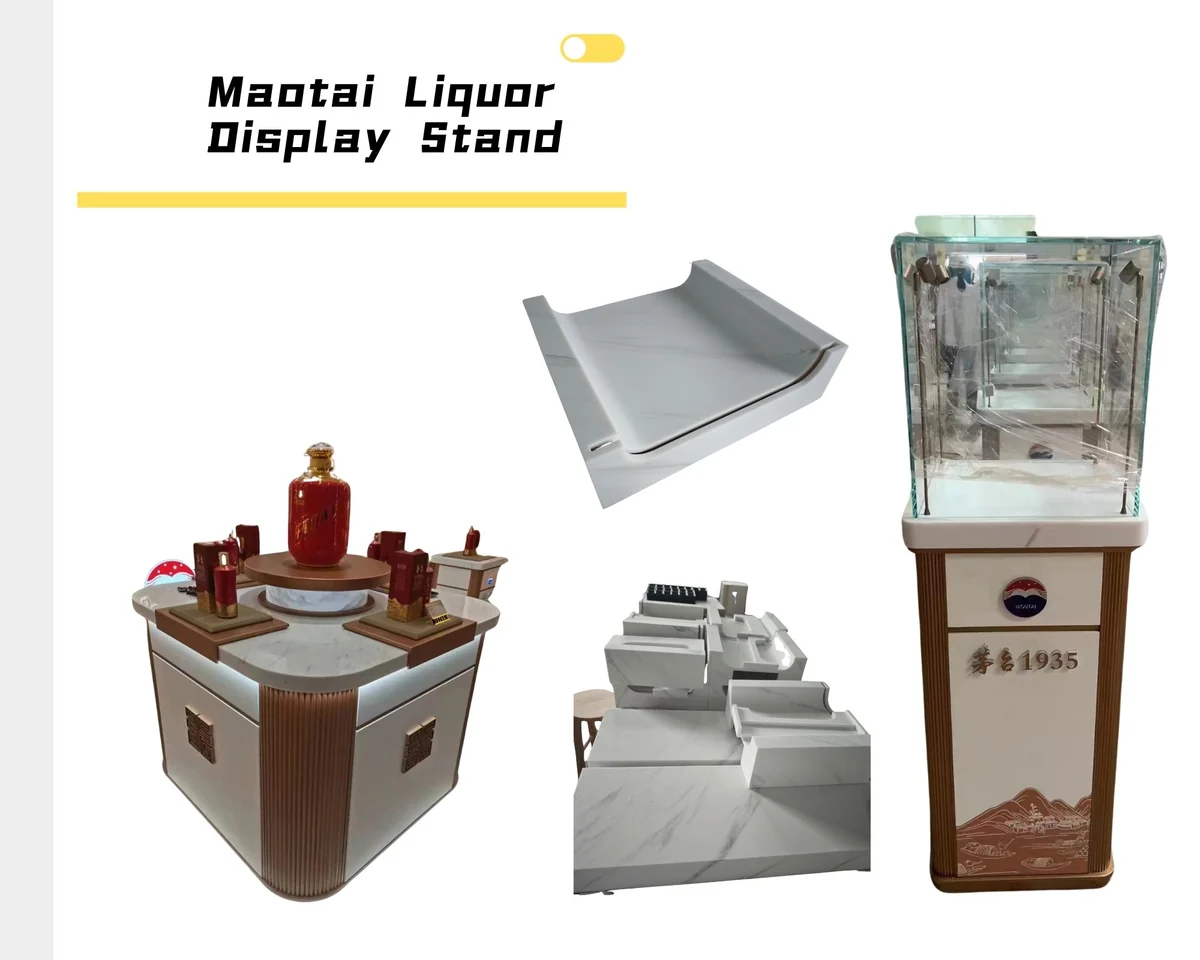
A display needs to support the items it presents and remain stable during use. Plan shelf spans, hidden frames, fixings and product access with the responsible designer. Where lighting or display equipment is integrated, provide maintenance access and coordinate the heat and electrical requirements separately.
Custom commercial furniture
Retail plinths, service fixtures and integrated furniture can combine a durable-looking surface with metal or timber substructures. Define which parts are visible, which are removable and which are installed on site. A modular approach may help transport and replacement, provided the joints remain deliberate parts of the design.
MATERIALS & SPECIFICATIONS
Define the details.
Material and forming review
Review pure acrylic or modified acrylic sheets against the required geometry and finish. Thermoforming is a formulation-specific process with practical limits; curved concepts need feasibility review and, where appropriate, a trial component. Flat joined forms may offer another route to the same visual intention.
Support and assembly
Specify the furniture's intended loads, support points and any project safety requirements. Solid surface is a surfacing material, and a visual thickness alone does not define structural capacity. Coordinate frames, fixings, floor interfaces and access panels with the finished object's size and intended use.
OEM furniture fabrication
Supply dimensioned drawings, a component schedule and clear revision control. CNC files should match the approved geometry, while finishing instructions should identify exposed faces and edges. Agree how parts are labeled, packed and assembled so that repeat orders follow the approved first article.
APPLICATION GALLERY
A closer look.
PREPARE YOUR PROJECT
Bring the object and its context together.
Send an image or concept drawing alongside dimensions, quantities, finish references and the intended environment. Explain what the furniture supports, whether it moves and how it will be maintained. For integrated pieces, include adjacent trades and installation access. ESHINE can then review a fabrication scope without assuming that a concept sketch already resolves the engineering or mounting strategy.
View ProjectsRELATED PRODUCTS
Find your material starting point.
FREQUENTLY ASKED QUESTIONS
Before you specify.
Can you develop a coffee table from a concept sketch?
A concept can begin the discussion, followed by dimensioned drawings and a review of support, construction and finish. Agree who develops and approves the technical design. A prototype is useful before committing a new furniture form to repeat production.
Can solid surface be combined with other materials?
Yes, mixed-material concepts can be reviewed with metal frames, timber elements or other specified components. Connections and movement need coordination. Confirm which components are included in the quotation and who is responsible for final assembly and any required furniture testing.
Are display references documented installation projects?
The gallery identifies existing fabrication and product-development references. They illustrate types of components rather than claiming a named installed project. Use the Projects section for the separate documented project archive, and send your own context for an application-specific review.
YOUR PROJECT / NEXT STEP
Request a Quote
Share your non-dining furniture concept, intended use and production scope. Discuss a prototype or OEM fabrication program.