An essential technical guide for architects, furniture designers, and fabricators covering acrylic solid surface bending, sheet thickness, heating methods, minimum bending radius, mold design, and fabrication limitations.
Introduction: Transforming Flat Sheets into Curved Designs
Curved surfaces have become an important feature of contemporary architecture, commercial interiors, and furniture design.
From flowing hotel reception desks and sculptural furniture to rounded countertops and curved wall panels, designers increasingly seek materials that combine creative freedom with practical functionality.
Solid surface thermoforming makes many of these designs possible.
Unlike natural stone, which generally requires cutting, carving, or assembling separate pieces to create curved forms, suitable acrylic solid surface sheets can be heated, shaped over molds, and cooled into new configurations.
Combined with precision CNC machining and color-matched adhesive joining, thermoforming can help create smooth, visually continuous architectural products.
However, successful thermoforming requires more than simply heating and bending a sheet.
The material formulation, sheet thickness, bending radius, heating temperature, mold design, and cooling process all influence the final result.
This guide explains the essential technical principles of solid surface thermoforming and how to apply them when developing custom countertops, furniture, and architectural components.
1. What Is Solid Surface Thermoforming?
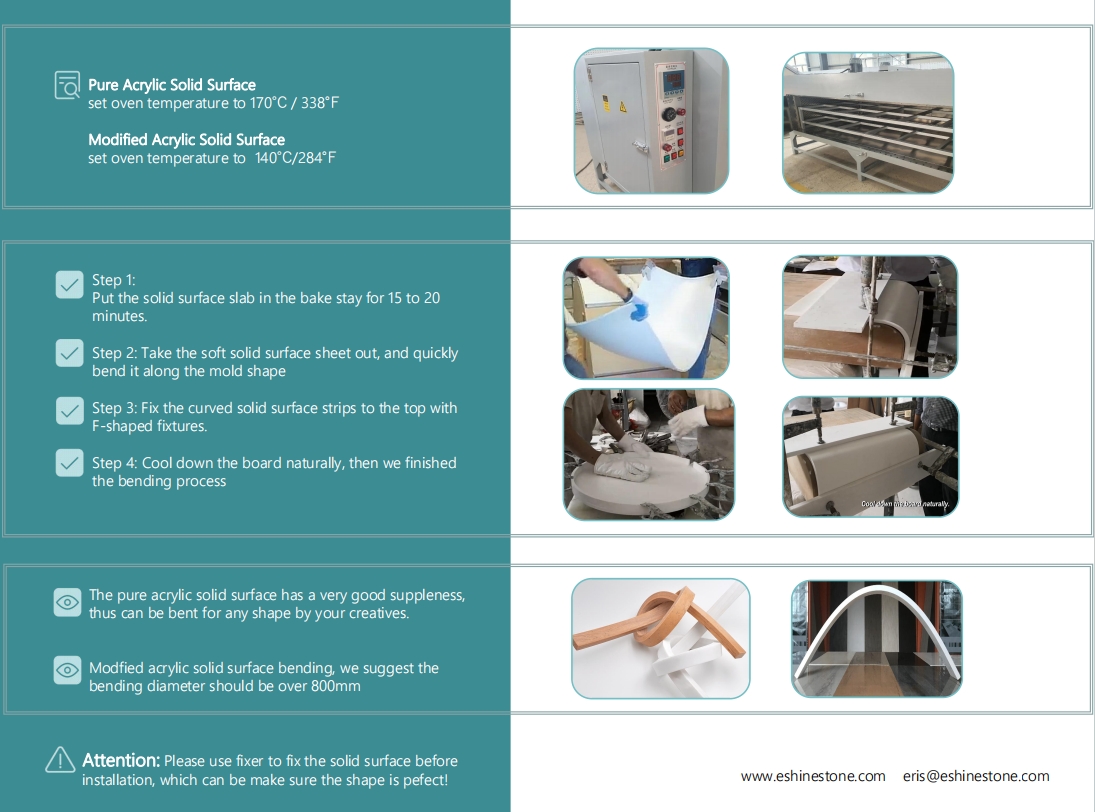
Solid surface thermoforming is a fabrication process in which a suitable solid surface sheet is heated until it becomes sufficiently pliable, shaped over a prepared mold, and cooled while maintaining the desired geometry.
The process generally involves five stages:
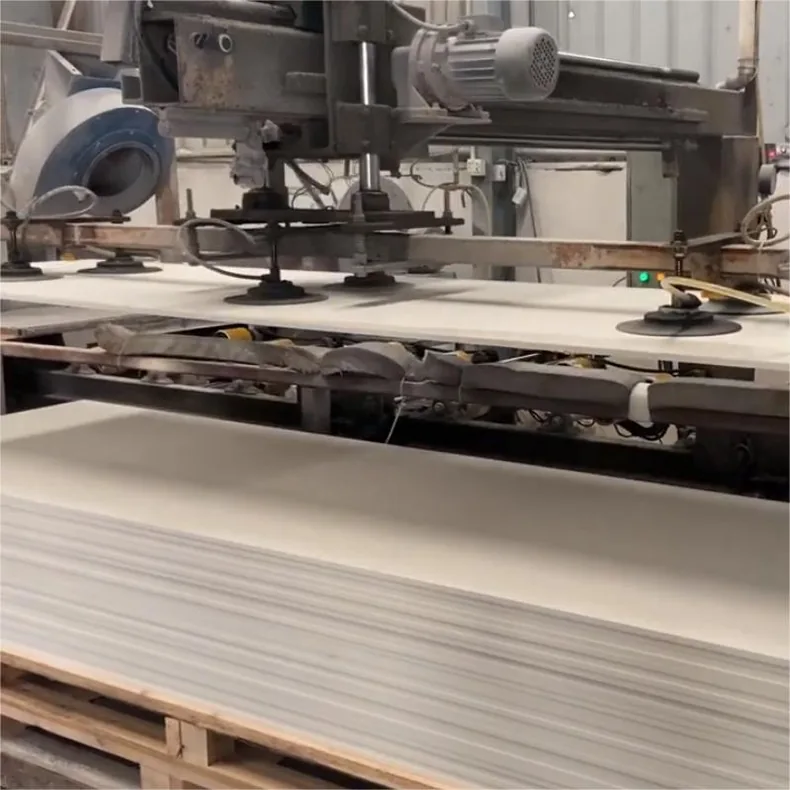
- Material Preparation: Selecting the appropriate material and preparing an oversized sheet blank.
- Controlled Heating: Heating the sheet uniformly to the material-specific forming temperature.
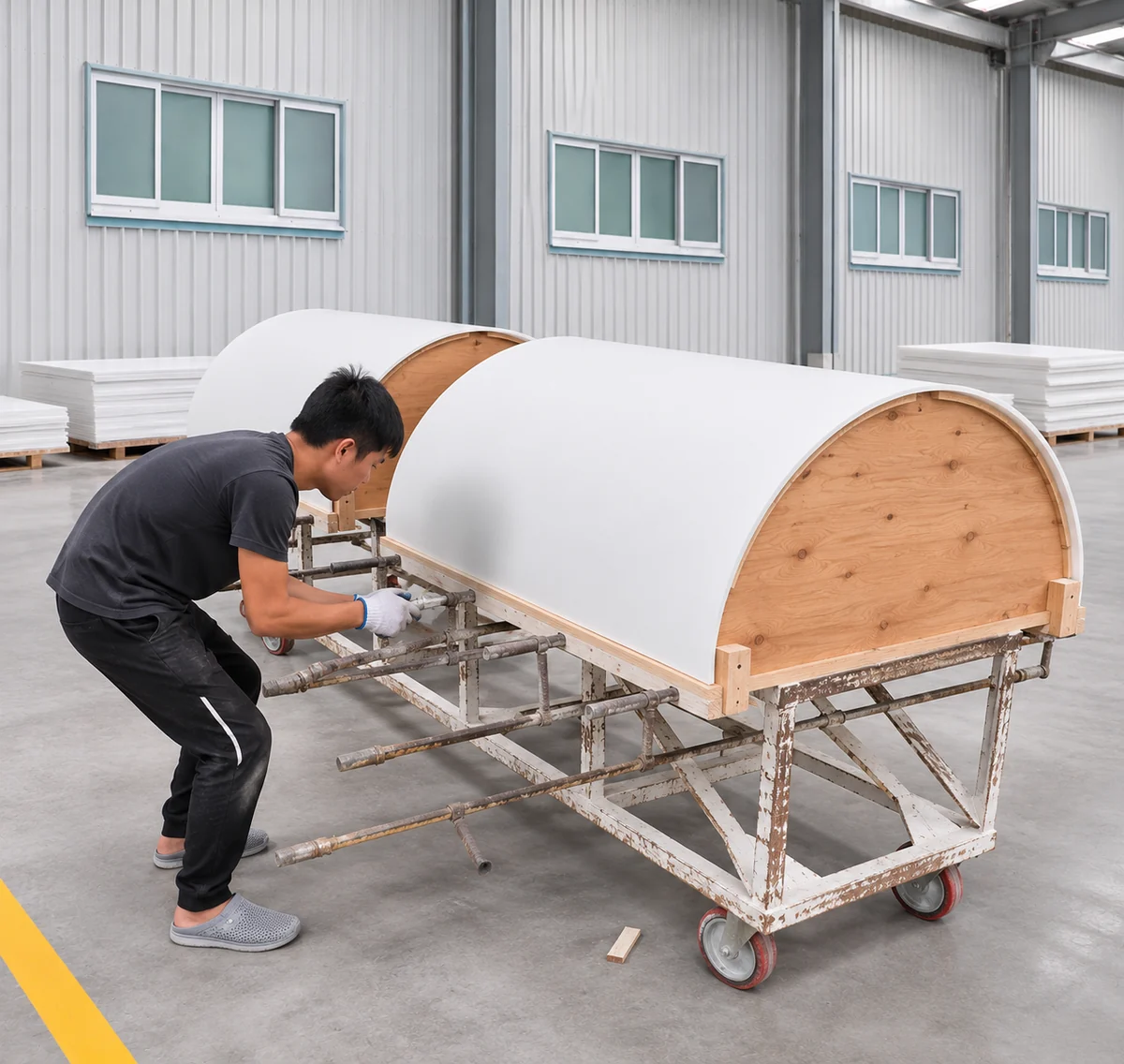
- Mold Forming: Bending or shaping the softened sheet using a mold, press, or other controlled forming equipment.
- Controlled Cooling: Holding the component in the mold until it becomes sufficiently rigid.
- Finishing and Assembly: Trimming, CNC machining, sanding, joining, and inspecting the formed component.
Thermoforming is particularly suitable for producing smooth bends, rounded corners, flowing profiles, and selected three-dimensional shapes.
It is important to distinguish between two types of curved designs.
Two-Dimensional (2D) Thermoforming
Two-dimensional forming creates a bend primarily along one direction.
Examples include:
- Curved reception desk fronts
- Rounded countertop edges
- Cylindrical architectural panels
- Curved furniture surfaces
- Simple U-shaped or L-shaped components
These shapes are generally more predictable to manufacture because material deformation is concentrated along one principal bending direction.
Three-Dimensional (3D) Thermoforming
Three-dimensional forming creates compound curves in multiple directions.
Examples include:
- Sculptural seating surfaces
- Complex furniture shells
- Organic architectural features
- Deep curved decorative components
These designs are more technically demanding because the material may need to stretch, compress, or redistribute across multiple directions.
Deep shapes and tight compound curves may require specialized molds, carefully controlled processing, and prototype testing.
In some cases, fabricating multiple components and joining them afterward provides a more reliable solution than attempting to form the entire product from one sheet.
2. Choosing the Right Solid Surface Material
Not every solid surface material performs equally during thermoforming.
The material's resin system, filler content, color, pattern, and internal structure influence its ability to bend without cracking or developing surface defects.
Pure Acrylic Solid Surface
Pure acrylic solid surface typically uses an acrylic resin system combined with mineral fillers and pigments.
Suitable grades are often preferred for projects requiring curved components and demanding fabrication.
Potential advantages include:
- Good thermoforming capability in appropriate formulations
- Compatibility with CNC machining
- Ability to produce curved surfaces
- Color-matched adhesive joining
- Repairable and refinishable surfaces
However, not every pure acrylic color or formulation has the same bending capability.
Modified Acrylic Solid Surface
Modified acrylic solid surface generally combines acrylic and polyester resin systems.
These materials can provide an economical option for countertops, furniture, and other fabricated products.
Their thermoforming performance depends on the exact resin formulation and material specifications.
For tight-radius or complex curved designs, a sample forming test should be completed before confirming production feasibility.
How Color and Pattern Affect Thermoforming
Solid colors, particularly lighter shades, are often easier to form than materials containing large decorative particles or complex veining.
| Material Appearance | General Thermoforming Consideration |
|---|---|
| Solid White | Often suitable for forming, subject to material grade |
| Light Solid Colors | Generally favorable for many curved applications |
| Dark Solid Colors | Whitening or stress marks may be more visible |
| Fine Particulate Patterns | Feasibility depends on particle size and formulation |
| Large Particulate Patterns | Greater risk of surface defects or cracking |
| Marble Vein Patterns | Pattern distortion and forming limitations must be evaluated |
| Translucent Materials | Requires grade-specific testing for appearance and forming behavior |
For projects involving marble-like veins or large decorative particles, architects should consider whether bending will distort the intended appearance.
ESHINE Recommendation: Confirm the exact material color and grade before finalizing a curved design. A successful bending test with one color does not guarantee equivalent results with another.
3. How Sheet Thickness Affects Thermoforming
Sheet thickness is one of the most important factors in solid surface thermoforming.
It influences heating time, bending resistance, achievable curvature, material handling, and final component design.
In general, thinner sheets are easier to bend, while thicker sheets require more energy and may need larger bending radii.
Common Thickness Options
| Sheet Thickness | Typical Design Considerations |
|---|---|
| 6 mm | Curved decorative panels and selected architectural features, with adequate backing and support |
| 8 mm | Lightweight curved components where the material grade permits |
| 10 mm | Selected furniture and architectural applications |
| 12 mm | Countertops, reception desks, furniture components, and curved architectural features |
| 15 mm | Specialized curved applications requiring additional feasibility testing |
| 20 mm and above | More demanding forming; alternative construction methods may be preferable |
These descriptions are general design considerations, not guaranteed forming capabilities for every thickness.
Why 12 mm Solid Surface Is Commonly Used
A 12 mm solid surface sheet offers a practical balance between fabrication versatility and material thickness for many interior applications.
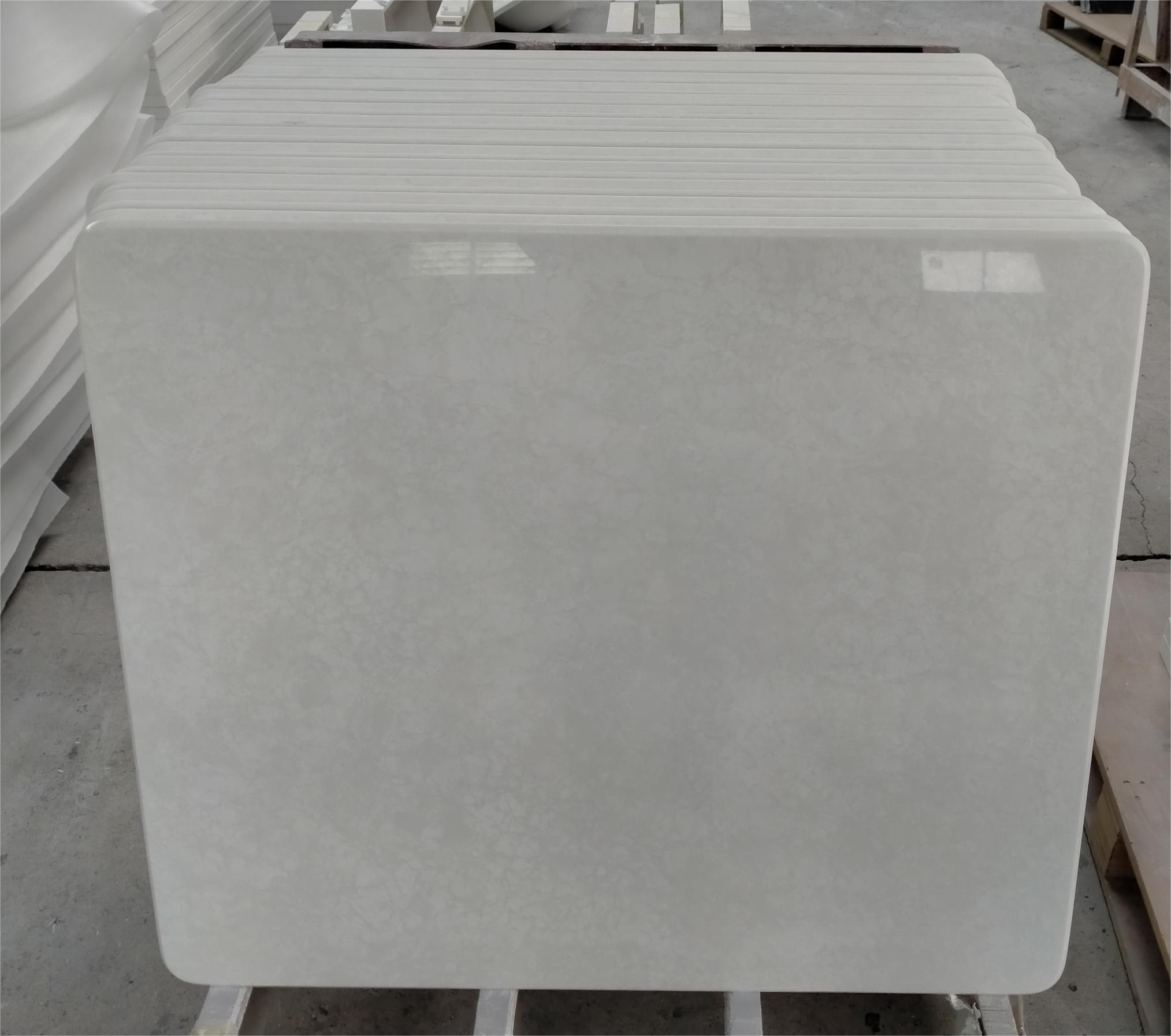
For example, a 3660 × 760 × 12 mm acrylic solid surface sheet can provide material for countertops, furniture surfaces, and selected curved components.
However, the actual achievable radius depends on the material grade, color, tooling, heating conditions, and geometry.
A thick-looking furniture edge does not necessarily require the entire product to be manufactured from a thick sheet.
In many designs, a formed or flat sheet can be combined with fabricated edge buildups and suitable structural supports.
This approach can reduce unnecessary material usage and improve design flexibility.
4. Understanding the Minimum Bending Radius
One of the most common questions architects and furniture designers ask is:
How tightly can solid surface be bent without cracking?
The answer depends on the minimum inside bending radius.
What Is the Minimum Inside Radius?
The inside radius is the radius measured along the inner surface of a curved component.
A smaller radius creates a tighter bend, while a larger radius produces a gentler curve.
For a simple constant-thickness bend:
Outside Radius = Inside Radius + Sheet Thickness
For example, a 12 mm thick sheet formed to an inside radius of 100 mm would have an approximate outside radius of 112 mm.
This relationship describes the geometry only; it does not establish whether the material can safely be formed to that radius.
What Determines the Minimum Bending Radius?
Six factors influence the achievable radius:
1. Sheet Thickness
Thicker sheets generally require larger bending radii under comparable forming conditions.
2. Material Formulation
Different resin systems and product grades have different thermoforming capabilities.
3. Color and Decorative Pattern
Dark colors, large particulates, and complex veining may restrict forming performance.
4. Heating Uniformity
Inconsistent heating can produce internal stresses, whitening, or cracking.
5. Mold Geometry
Smooth, properly designed molds help distribute deformation more evenly.
6. Type of Curvature
A simple cylindrical bend is usually easier to produce than a complex double-curved shape.
Industry Examples of Minimum Inside Radius
Published manufacturer specifications demonstrate how significantly thermoforming limits can vary.
| Manufacturer / Material | Thickness | Published Minimum Inside Radius |
|---|---|---|
| Corian Solid Surface, suitable colors | 6 mm | 25 mm |
| Corian Solid Surface, suitable colors | 12 mm | 76 mm |
| Corian Solid Surface, suitable colors | 19 mm | 127 mm |
| HIMACS, selected solid colors | 12 mm | 50 mm |
| HIMACS Ultra-Thermoforming grade | 12 mm | 6 mm |
| HIMACS, selected decorative patterns | 12 mm | 100–200 mm or more |
These are selected brand-specific reference values, not universal solid surface standards or guaranteed ESHINE specifications.
Some specialized thermoforming materials are formulated for much tighter radii than conventional grades.
For ESHINE custom projects, the minimum achievable bending radius should be confirmed through technical review and, where necessary, sample testing.
Design Recommendation
When possible, incorporate a generous radius during the early design stage.
Larger radii can make fabrication easier, reduce the risk of cracking, and improve repeatability across production batches.
For projects requiring extremely tight curves, alternative solutions may include:
- Using a thinner suitable material with proper support
- Selecting a specialized thermoforming grade
- Dividing the design into smaller fabricated components
- Combining thermoforming with CNC machining and adhesive joining
- Redesigning the curve to reduce localized stress
These approaches should be reviewed for structural suitability and appearance before production.
5. Heating Solid Surface Sheets: Temperature and Equipment
Controlled heating is essential for successful thermoforming.
The goal is to bring the sheet to an appropriate and sufficiently uniform temperature throughout its thickness so that it can be shaped without excessive stress.
Common Heating Equipment
Convection Ovens
Convection ovens use circulating heated air to warm the material.
They can accommodate different sheet sizes but may require longer heating cycles.
Platen Heating Systems
Platen systems use heated surfaces to transfer heat into the sheet.
They can provide efficient and consistent heating when properly calibrated and operated.
Specialized Thermoforming Equipment
Dedicated systems may combine heating, controlled forming, vacuum pressure, or matched molds.
Equipment selection depends on the component dimensions, required curvature, forming complexity, and production quantity.
What Temperature Is Required?
The correct heating temperature is specific to the selected material and equipment.
As an industry reference, published manufacturer guidance for certain acrylic solid surface products describes forming-temperature ranges of approximately 135–190°C (275–375°F).
However, this broad range covers different manufacturers and formulations. It must not be treated as a universal processing setting.
For example, some standard acrylic grades require substantially different conditions from materials developed specifically for enhanced thermoforming.
The temperature of the sheet itself is particularly important.
An oven display showing the desired temperature does not necessarily mean the entire material has reached a suitable forming temperature.
Risks of Incorrect Heating
| Problem | Possible Result |
|---|---|
| Insufficient Heating | Cracking, stress whitening, incomplete forming |
| Uneven Heating | Localized deformation, cracking |
| Excessive Heating | Discoloration, blistering, surface damage |
| Excessive Heating Duration | Degradation or changes in appearance |
| Uneven Cooling | Warping, residual stress, dimensional changes |
Localized heating with a heat gun or torch is not recommended as a general substitute for controlled full-piece heating, because it can create severe temperature differences.
All processing settings should follow the material supplier's technical guidance and equipment safety procedures.
6. Mold Design for Curved Solid Surface Components
Mold design plays a critical role in achieving accurate and repeatable curved shapes.
A thermoforming mold controls the intended geometry while supporting the heated material during shaping and cooling.
Poor mold design can cause distortion, unwanted marks, wrinkles, or inconsistent dimensions.
Common Mold Types
Male Molds
The heated sheet is formed over a raised mold surface.
These molds are often used for convex shapes, curved furniture parts, and selected architectural components.
Female Molds
The heated sheet is formed into a cavity.
These can be suitable for concave components, although deep cavities may present challenges with material movement and release.
Matched Male and Female Molds
Two complementary mold surfaces control the material during forming.
This method may improve dimensional consistency for certain shapes and repetitive manufacturing applications.
Vacuum Forming Systems
A vacuum membrane can help press softened material against a prepared mold.
These systems are useful for selected curved designs, although not every compound shape can be produced reliably through vacuum pressure alone.
Common Mold Materials
| Mold Material | Common Considerations |
|---|---|
| MDF / Plywood | Economical for prototypes and limited production; thermal durability must be assessed |
| Engineered Tooling Boards | Suitable for precision machining and selected production applications |
| Composite Molds | Can offer durability and consistent geometry |
| Metal Molds | Suitable for some repeat-production applications; heat transfer requires careful control |
Essential Mold Design Considerations
A well-designed mold should provide:
- Smooth contact surfaces
- Consistent curvature
- Adequate structural rigidity
- Suitable release geometry
- Allowance for material movement
- Appropriate temperature behavior
- Space for handling and trimming
For deep molded components, sufficient draft angles and mold-release planning are important.
Some complex designs may require split molds to prevent the finished part from becoming trapped as it cools.
Design Tip: Final mold geometry should be validated with prototype forming, particularly for asymmetrical components and complex three-dimensional surfaces.
7. Step-by-Step Solid Surface Thermoforming Process
A typical professional thermoforming workflow follows these stages.
Step 1 — Review the Design
Evaluate the technical drawing, material thickness, desired bending radius, and final product application.
Confirm whether the shape can be manufactured as a single formed component or requires several fabricated parts.
Step 2 — Select and Inspect the Material
Choose a suitable solid surface grade and inspect the sheet for scratches, chips, cracks, or other defects.
Any protective film should be removed as required by the material manufacturer's instructions.
Step 3 — Prepare the Sheet Blank
Cut the sheet with an appropriate allowance for deformation and final trimming.
Smooth the edges and remove any cracks, sharp notches, or machining defects that could initiate tearing.
Step 4 — Prepare the Mold and Heating Equipment
Inspect the mold surface, verify its dimensions, and ensure the heating system has been calibrated.
Prepare appropriate heat-resistant gloves, protective equipment, and safe handling procedures.
Step 5 — Heat the Sheet Uniformly
Heat the material according to the validated temperature and time requirements for the selected grade.
Monitor the process to avoid uneven heating, overheating, or insufficient softening.
Step 6 — Form the Heated Sheet
Transfer the softened sheet to the prepared mold using suitable handling equipment and trained personnel.
Apply controlled forming pressure while avoiding excessive localized stretching.
Step 7 — Cool the Component in the Mold
Maintain the required shape and support until the sheet has cooled sufficiently.
Premature removal can cause distortion or loss of dimensional accuracy.
Step 8 — Trim and Finish
After cooling, trim excess material and complete the required CNC machining, edge processing, sanding, and polishing.
Step 9 — Join and Assemble
Where the final design includes multiple components, carry out the necessary adhesive joining and assembly after forming.
Step 10 — Inspect the Finished Product
Check the curved component against the approved drawing, including:
- Overall dimensions
- Bending radius
- Shape consistency
- Surface appearance
- Cracks or whitening
- Edge quality
- Joint appearance
- Assembly fit
For repeat production, maintaining validated process parameters helps improve consistency between components.
8. Fabrication Limitations: What Designers Should Know
Although thermoforming offers significant design flexibility, it is not suitable for every shape or solid surface material.
Understanding these limitations early can prevent costly changes during production.
Tight Bending Radii
Extremely tight bends can generate excessive stress, especially in thicker sheets.
The material may crack, whiten, or become distorted if the requested radius is smaller than its validated forming capability.
Complex Compound Curves
Double-curved surfaces may require substantial deformation in multiple directions.
This can result in wrinkling, uneven material thickness, or localized stretching.
Where necessary, complex shapes can be divided into smaller parts for forming and subsequent joining.
Decorative Patterns and Veining
Marble veins and directional patterns may change appearance during bending.
For highly decorative materials, forming tests should consider both mechanical performance and visual consistency.
Large Components
Large sheets require sufficient heating capacity, handling space, personnel, and mold support.
The larger the component, the more important temperature uniformity and controlled handling become.
Dimensional Stability
Material movement during heating and cooling can affect final dimensions.
Components requiring precise installation tolerances should be formed before final machining wherever practical.
Structural Design
Thermoforming changes the shape of the material but does not eliminate the need for appropriate structural support.
Large overhangs, furniture tops, and load-bearing assemblies require additional engineering review.
9. Applications of Thermoformed Solid Surface
Thermoformed solid surface is particularly valuable when projects require a combination of design flexibility, surface continuity, and custom fabrication.
Curved Reception Desks
Hotels, offices, healthcare facilities, and retail spaces frequently use curved reception counters to create welcoming interiors.
Thermoforming can produce rounded fronts, flowing corners, and coordinated architectural components.
Custom Solid Surface Furniture
Furniture designers can use thermoforming to create curved table components, rounded furniture edges, sculptural forms, and coordinated surfaces.
The manufacturing approach should consider both the visual design and the supporting structure.
Commercial Countertops
Curved counters can be used in restaurants, hospitality spaces, retail interiors, and public buildings.
Thermoforming combined with compatible adhesive joining makes it possible to manufacture larger, visually continuous assemblies.
Architectural Wall Features
Selected solid surface grades can be shaped into decorative curved wall panels and interior features.
These applications require careful attention to backing systems, fixing details, movement, and installation conditions.
Bathroom and Vanity Components
Thermoforming can be combined with CNC machining and adhesive bonding to create rounded vanity details and custom bathroom components.
Complex basin shapes may require additional forming techniques, specialized manufacturing methods, or assembly from separately fabricated parts.
10. Combining Thermoforming with Seamless Joining
One of the most effective approaches to complex solid surface fabrication is combining controlled thermoforming with precision adhesive joining.
Instead of attempting to form an entire product in one piece, a manufacturer may divide the design into several components.
Each component is then individually fabricated, trimmed, and joined into a complete assembly.
For example, a curved hotel reception desk may consist of:
- A flat or gently curved countertop
- A thermoformed front panel
- Curved corner components
- Fabricated end panels
- An internal structural support system
Using compatible adhesives and proper finishing techniques, the joints can be made visually inconspicuous.
However, the final appearance depends on the color, pattern, joint location, and fabrication quality.
This combined approach can offer greater design flexibility, improve manufacturability, and make transportation and installation easier.
The objective is not always to manufacture a complex product from one continuous sheet, but to achieve a refined finished appearance through appropriate fabrication techniques.
11. Designing for Manufacturability: Advice for Architects and Furniture Designers
Early collaboration between designers and fabricators can significantly improve the outcome of a curved solid surface project.
Before finalizing a design, consider the following questions:
Is the selected material suitable for thermoforming?
Verify the exact grade, thickness, and color.
Is the desired radius achievable?
Request confirmation based on material specifications and sample testing.
Can the component fit the available production equipment?
Large curved structures may require sectional fabrication.
Does the shape require a specialized mold?
Complex forms may increase tooling costs and development time.
Could the design be divided into separate components?
A multi-part assembly may provide a better balance between appearance, cost, and manufacturing reliability.
What level of dimensional precision is required?
Coordinate forming, trimming, CNC machining, and installation requirements.
Is a prototype necessary?
For unusual shapes or tight tolerances, a prototype can validate the manufacturing process before full production.
12. Custom Solid Surface Thermoforming with ESHINE
ESHINE supports custom solid surface projects for architects, interior designers, furniture manufacturers, contractors, and international buyers.
Our OEM/ODM solutions cover material selection, drawing review, and coordination of the required fabrication processes.
Depending on the project, these may include:
- CNC machining and precision cutting
- Solid surface thermoforming
- Seamless adhesive joining
- Edge fabrication
- Integrated components
- Custom furniture and countertop assembly
- Finishing, quality inspection, and export packing
For custom curved products, our team can review drawings, material preferences, sheet thicknesses, and design requirements to assess manufacturing feasibility.
For complex geometries, sample production may be recommended before confirming final production specifications.
What Information Should You Send for a Thermoforming Inquiry?
Please provide:
- Product type and application
- Overall length, width, and height
- Required sheet thickness
- Preferred material and color
- Inside bending radius or detailed curve geometry
- Technical drawings or 3D files
- Surface finish requirements
- Estimated order quantity
- Destination country
- Any special quality or installation requirements
This information helps evaluate whether the component can be thermoformed directly or whether an alternative fabrication method would be more appropriate.
Frequently Asked Questions
Can all solid surface sheets be thermoformed?
No. Thermoforming performance depends on the resin formulation, thickness, color, and decorative pattern. Some materials are suitable for complex bending, while others have significant limitations.
What is the minimum bending radius for 12 mm solid surface?
There is no universal minimum radius for every 12 mm solid surface sheet. Published manufacturer specifications vary substantially. The applicable radius must be verified for the exact material grade and forming conditions.
What temperature is needed to bend acrylic solid surface?
The required forming temperature varies according to the selected material and heating equipment. Manufacturers publish different processing ranges, so the approved technical guidelines for the actual sheet must be followed.
Can marble-pattern solid surface be thermoformed?
Some marble-pattern materials can be formed, but decorative veining may distort during bending. Testing is recommended before committing to a curved design.
Can solid surface be thermoformed into three-dimensional shapes?
Yes, certain materials can be formed into complex three-dimensional shapes. However, compound curves require more advanced mold design, process control, and feasibility testing than simple two-dimensional bends.
Can thermoformed solid surface pieces be seamlessly joined?
Yes. Compatible color-matched adhesives and appropriate finishing techniques can produce visually inconspicuous joints between formed components.
Can ESHINE manufacture curved solid surface furniture and reception desks?
ESHINE supports custom fabrication inquiries for curved reception desks, furniture components, countertops, and other architectural products. Production feasibility depends on the approved design, material selection, and manufacturing requirements.
Conclusion: From Curved Concepts to Finished Solid Surface Products
Solid surface thermoforming expands the creative possibilities of modern architecture, interior design, and furniture manufacturing.
By understanding material selection, sheet thickness, minimum bending radius, controlled heating, mold design, and fabrication limitations, designers can develop curved products that are both visually distinctive and practical to manufacture.
For complex projects, thermoforming is often most effective when combined with CNC machining, precision finishing, and carefully planned adhesive joining.
At ESHINE, we help turn design concepts into custom solid surface products through coordinated OEM/ODM fabrication solutions.
Whether you are developing a curved reception desk, a custom furniture collection, or a unique architectural component, early technical collaboration can help transform your concept into a manufacturable design.
Have a curved solid surface project in mind?
Share your technical drawings, preferred material, bending radius, and project quantity with ESHINE to discuss available manufacturing options.
Explore Our Fabrication Capabilities: https://eshinestone.com/fabrication/
Browse Solid Surface Materials: https://eshinestone.com/products/
Contact ESHINE: https://eshinestone.com/contact/