

1. Composition and Performance
Both materials typically use aluminum trihydrate (ATH), pigments and additives. Their main difference is the resin binder: pure acrylic uses an acrylic-based binder, primarily PMMA, while modified acrylic typically blends acrylic and unsaturated polyester resins. Formulations vary by manufacturer.

| Property | Pure acrylic | Modified acrylic |
|---|---|---|
| Resin binder | Acrylic-based (PMMA) | Typically acrylic and polyester |
| Surface and repairs | Non-porous surface with repair options | Non-porous surface with repair options |
| Machining and joining | Suitable for CNC machining and inconspicuous joints | Suitable for standard CNC machining and inconspicuous joints |
| Impact and color stability | Check test data for the specified grade and color | Check test data for the specified grade and color |
2. Thermoforming and Bending
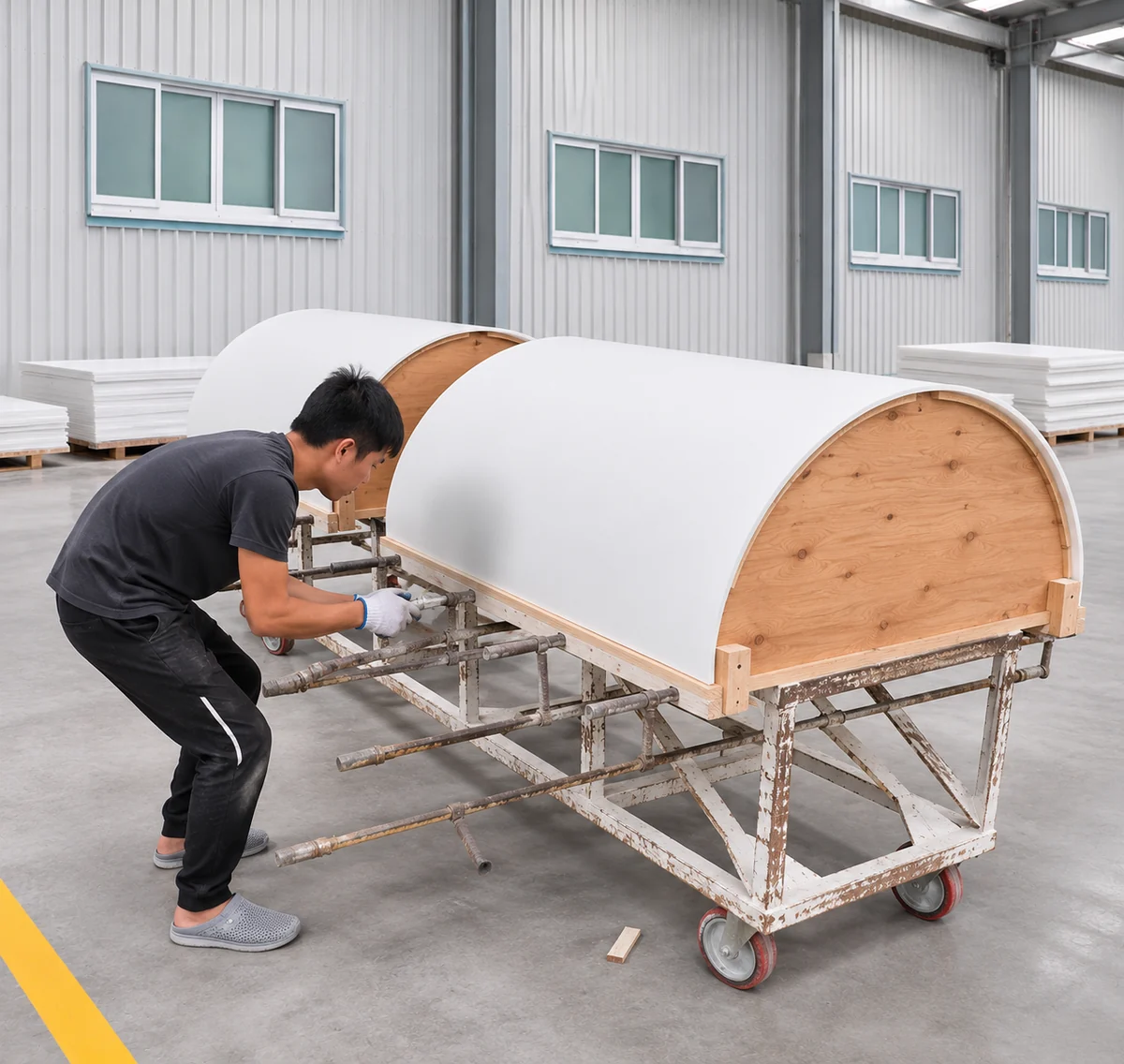
Thermoforming uses heat to make the sheet flexible enough to shape over a mold. Pure acrylic is generally the first choice for tight curves and complex forms. Some modified acrylic grades can take gentle bends, though demanding bends may increase the risk of cracking or surface whitening.
| Design | Pure acrylic | Modified acrylic |
|---|---|---|
| Flat panels | Suitable | Suitable |
| Gentle curves | Generally suitable | Possible with a forming trial |
| Tight radii or complex 3D curves | Preferred starting point | Requires careful validation |
The achievable radius depends on the grade, color, sheet thickness, heating and mold design. Test the specified material on the intended geometry before ordering for production. See the Thermoforming Guide for forming considerations.
3. Applications and Project Budget
Pure acrylic sheets generally cost more because of the resin binder. Compare quotes for the same size, thickness, color and quantity, then factor in mold setup, fabrication, waste and rejects to estimate the cost per finished part.

| Project | Starting choice | Budget consideration |
|---|---|---|
| Standard kitchen counters, vanity tops and flat table tops | Modified acrylic | Lower sheet cost can benefit repeat orders. |
| Curved reception desks, furniture and architectural details | Pure acrylic | Forming capability can justify the higher sheet cost. |
| Integrated basins | Pure acrylic if thermoforming is required | Compare the finished assembly cost, including joining and finishing. |
| Commercial fit-outs with flat and curved parts | Consider both grades | Verify color, finish and adhesive compatibility before mixing grades. |
Frequently Asked Questions
Is pure acrylic solid surface better than modified acrylic?
Pure acrylic is generally preferred for complex curved designs. Modified acrylic can offer better value for standard flat products.
Is pure acrylic solid surface made from 100% acrylic?
The term describes the resin binder. The finished sheet also contains mineral filler, pigments and additives.
Can modified acrylic solid surface be thermoformed?
Some grades can be formed. Test the intended color, thickness and bend radius before production.
How much more expensive is pure acrylic?
The difference varies by formulation, size, thickness, color and quantity. Request quotes on the same specifications to compare prices.
Which grade works for kitchen countertops?
Both can suit standard countertops. The choice depends on the specification, geometry and budget.
Which grade is better for bulk orders?
Modified acrylic can reduce sheet cost for repeat flat components. For curved parts, compare the cost per accepted finished piece after trial production.
Need Help Selecting the Right Solid Surface Material?
ESHINE supplies pure and modified acrylic sheets and fabricates custom countertops, furniture, basins and architectural components. Share your drawings, color, quantity and any bend radii so we can recommend a grade and discuss samples and pricing.

